
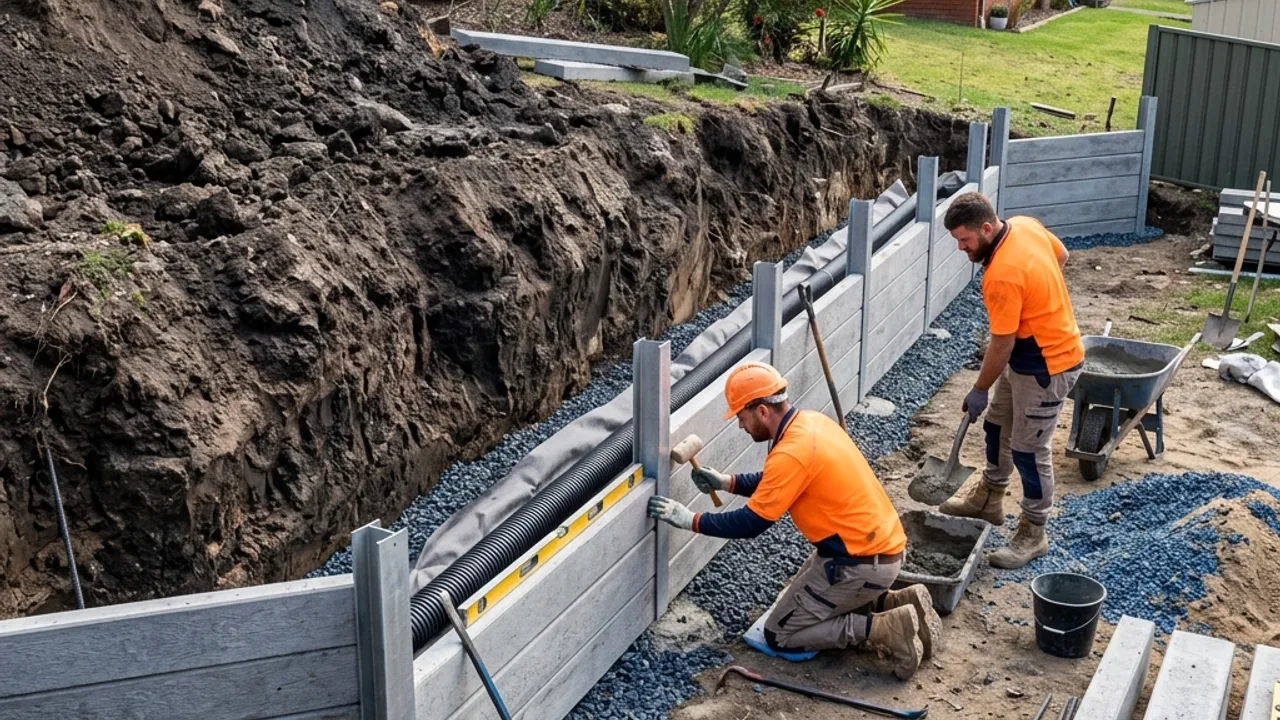
Toowoomba retaining walls: retaining wall repairs
A repair enquiry should start with the symptom and the cause. Leaning panels, cracked blocks, rotten sleepers, rusted posts, wet backfill and soil escaping through gaps point to different repair paths, and some walls should be replaced instead of patched.
Photograph the wall from both ends, the retained side if safe, the top edge, any drainage outlet and anything sitting above it. Movement can come from water pressure, poor backfill, surcharge, footing movement or an older wall built for a smaller load.
Repairs near a boundary need careful neighbour handling. If the wall supports built-up or excavated earth near a shared fence line, discuss access, temporary support, fence removal and drainage before work starts. That reduces surprises and protects the wall assessment.
A provider may recommend make-safe work before a final repair. That can include reducing load, redirecting surface water or keeping people away from a failing edge. The enquiry form should explain urgency without asking the provider to diagnose from one close-up photo.
Where this wall type succeeds or fails
Older Toowoomba yards often have layered work: a timber wall beside a block wall, a fence fixed into posts, garden beds added later or stormwater changed after renovations. Include that history when known, because the visible wall may not be the original problem.
Approval and engineering questions can arise during repairs, especially when a wall is higher, closer to structures or carrying a driveway load. A repair scope should say whether the proposed work is cosmetic, structural, replacement-led or subject to further design.
The best outcome is a clear decision: repair, replace, monitor, make safe or seek engineering advice. That is more useful than a cheap patch that leaves drainage pressure, corroded posts or failed backfill untouched.
Include any change noticed over time: when cracks appeared, whether lean worsens after rain, whether posts are rusting at ground level, and whether the wall movement is affecting paving, fencing or neighbour levels.
Movement causes and make-safe risks
Retaining wall repairs should start by sorting the visible symptom from the likely cause: a cracked face, leaning post, wet backfill, sinking path and soil spilling through joints each point to a different repair conversation. The enquiry should describe when the movement was noticed and whether it worsens after rain.
Some repairs are really staged replacements. If a fence is attached, a neighbour level is involved, or a driveway load sits above the wall, a provider may need to make the area safe before pricing the permanent answer. The homeowner should say whether there are children, tenants, pets or public access near the wall so urgency is understood without turning the online form into an emergency assessment.
Good repair quoting also includes the retained side. A close-up of a crack is rarely enough. Wider site views of drainage outlets, surface falls, posts, wall ends and anything above the wall help a provider decide whether the next step is patching, replacement, monitoring or formal engineering advice. That protects the owner from paying for work that leaves the cause untouched.
Repair written scope checks
Repair quotes should identify what evidence would change the recommendation. A provider might inspect the face and then ask to expose a post, check the backfill, reduce water pressure or inspect the retained side before confirming a method. That is not delay for its own sake; it prevents a cosmetic repair from hiding a structural or drainage problem that will return.
A repair quote is strongest when it states what will remain unchanged. If the provider repairs posts but leaves old drainage, replaces a short section but leaves the neighbouring run, or recommends monitoring, the owner should understand the residual risk. That turns a repair from a vague patch into a documented decision.
- Separate visible symptoms from drainage, footing, post or surcharge causes.
- Confirm whether work is cosmetic, structural, replacement-led or make-safe.
- Name monitoring, staged replacement or engineering input where movement is active.
Toowoomba areas where this service is common
Area notes help explain whether local wall movement is linked to rain, older materials, fence loads, neighbour levels or make-safe access.
Retaining Wall Repairs questions
Short answers for homeowners considering this retaining wall work.