
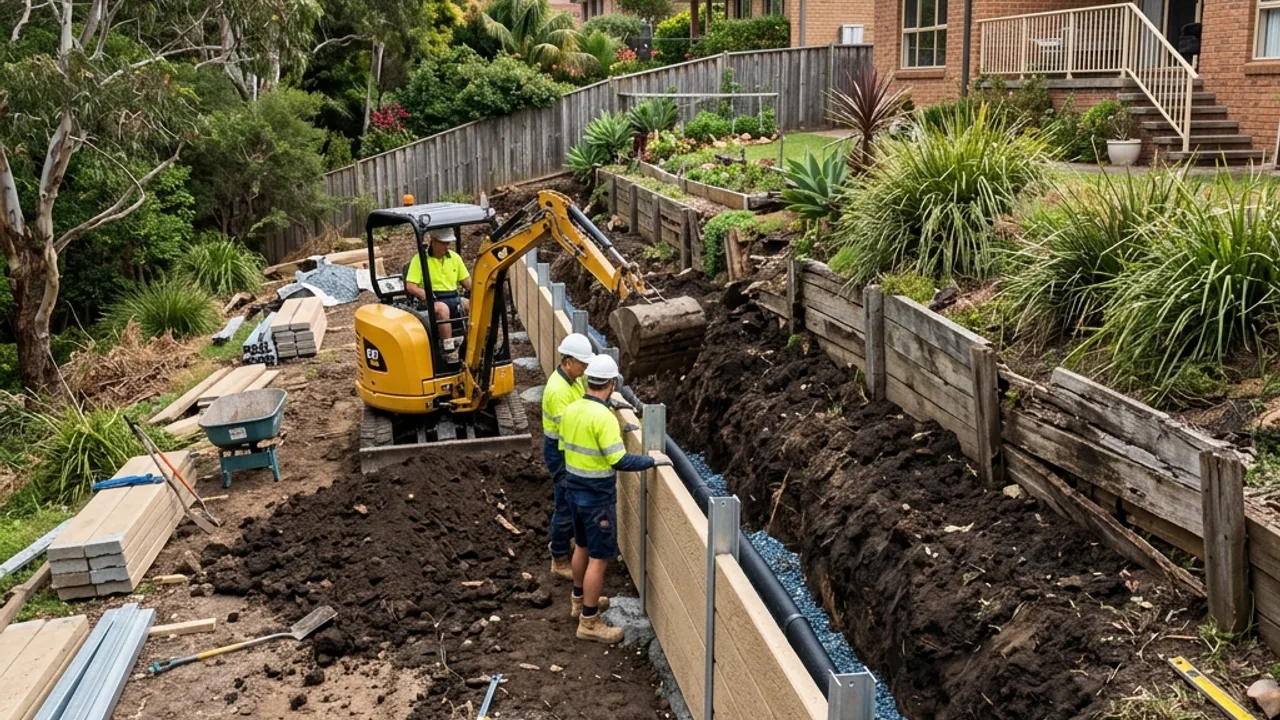
Toowoomba retaining walls: retaining wall replacement
Replacement starts with the existing wall, not the preferred new material. The brief should explain why the wall is being replaced: movement, rot, cracking, drainage failure, changed levels, renovation work, driveway widening or a safer boundary edge.
Demolition can be a major part of the price. Tell the provider whether old sleepers, blocks, posts, concrete, roots, fences or garden structures need removal. Spoil disposal, temporary support and neighbour access can change the sequence before any new wall starts.
The replacement should correct the reason the old wall failed. If water sat behind the wall, if the retained side was overloaded, or if a fence was added later, those facts need to be included. Otherwise the new wall may inherit the same problem.
A like-for-like replacement is not always appropriate. Concrete sleepers, blocks, timber, engineered systems and staged repairs each suit different heights, visibility, budgets and access conditions. The replacement decision should test options against the site, not just appearance.
Where this wall type succeeds or fails
Toowoomba’s mix of older inner yards, western growth lots and range slopes means replacement access varies widely. A narrow side path, established garden, steep fall or nearby shed can decide whether materials are carried by hand, machine or staged deliveries.
Approval triggers still apply when replacing a wall, especially if the new work changes height, supports extra load or affects a fence. The enquiry should not assume an old wall proves the replacement can proceed without checks.
The written scope should make clear whether the price is for a true replacement, a staged repair or a cosmetic rebuild. That distinction matters more than a single list of line items.
Replacement quotes should also state what happens during the changeover: temporary support, fence handling, access protection, neighbour communication and how long the retained area may remain open before the new structure is complete.
Demolition sequence and replacement risk
Replacement work starts with the old wall’s failure pattern. Rot, rust, lean, cracked masonry, soil loss, wet backfill and added surcharge all tell a different story. The enquiry should describe whether the replacement is driven by safety, presentation, a renovation, a boundary dispute, a sale deadline or a desire to prevent the same problem returning in a few years.
The first replacement conversation should also test how disruptive the changeover can be. A wall behind a side gate, beside a shared fence or under established planting may require hand work, staged access or short closure periods that matter before the new wall system is chosen.
A replacement price should make the decision point clear: remove and rebuild, rebuild only a failed section, or stabilise now and return later for a larger scope. That avoids comparing a full reset with a cheaper option that leaves the cause untouched.
Replacement written scope checks
Household planning matters during replacement. Pets, children, tenants, parking, bins and daily entry routes can all be affected while a wall is open, so the enquiry should name the people and routines that need protection during the works.
Before accepting replacement work, ask what evidence would change the recommendation after demolition starts. Hidden footings, soft ground, undocumented services or damaged drainage can alter the method, and the written response should explain how those discoveries are handled.
- Confirm demolition, disposal, temporary support and fence handling before removal.
- Check drainage upgrades and backfill before replacing the visible wall face.
- Name reinstatement, neighbour access and staged protection for retained ground.
Toowoomba areas where this service is common
Area notes help plan demolition, temporary support, drainage upgrades, neighbour access and material handling for a replacement wall.
Retaining Wall Replacement questions
Short answers for homeowners considering this retaining wall work.