
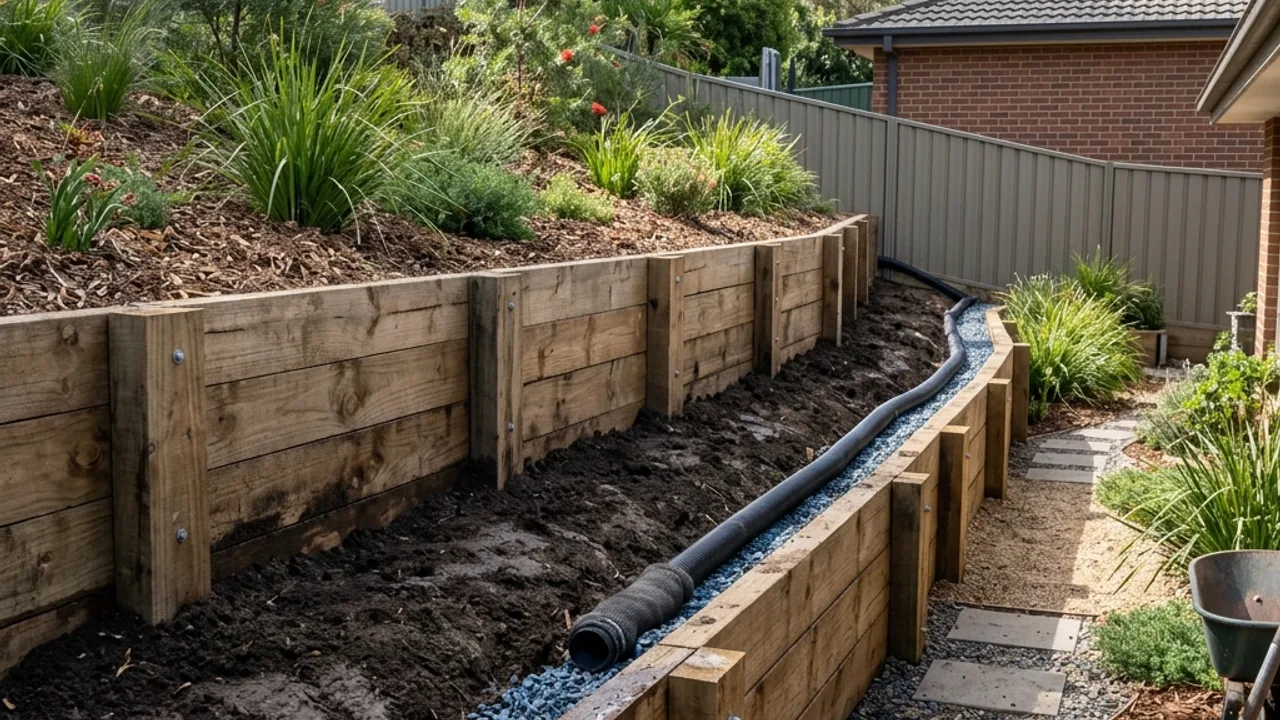
Toowoomba retaining walls: timber sleeper retaining walls
Timber sleeper walls can be practical for low garden beds, short side paths and budget-sensitive yard shaping, but they need honest expectations. In Toowoomba conditions, soil contact, termites, shaded damp corners and surface water all affect service life.
The enquiry should say whether the wall is new, a like-for-like replacement or a temporary improvement before a larger rebuild. A small treated-pine wall behind a garden bed is a different decision from a timber wall holding a driveway or neighbour level change.
Drainage remains part of the scope even for lower walls. Gravel, pipe, free-draining backfill and surface fall can keep water from sitting against sleepers. Without that detail, the cheapest timber price may simply move the failure forward.
Posts deserve specific attention. Steel posts, timber posts and existing post reuse each change cost and durability. Post-line, ground-condition and wall-end notes help a provider decide whether the job is straightforward or likely to uncover hidden rot.
Where this wall type succeeds or fails
Timber can make sense where appearance, budget and future replacement are balanced. It is less convincing where height, surcharge, wet soil or long-term structural expectation are the main drivers. The first conversation should test those limits before a price is treated as comparable.
Approval triggers still apply. If the wall height, nearby structures, surcharge loads or fence combination meet Council thresholds, the material choice does not remove the need for proper advice. The site brief should flag those risks early.
Ask the provider to state sleeper treatment, post material, footing approach, drainage allowance, backfill, expected exclusions and whether old material removal is included. That prevents a low timber price from hiding the work needed to keep the wall serviceable.
A timber scope should also record shade, irrigation, garden mulch depth and termite-sensitive areas, because damp hidden corners can shorten the wall life more than the visible street-facing section suggests.
Timber life, wet soil and post support
Timber sleeper scopes should be honest about expected life. A lower garden wall in a dry, ventilated position is a different risk from a shaded boundary wall with wet soil, mulch, irrigation and termite-sensitive landscaping against it. The first wall assessment should say whether the owner wants a cost-conscious improvement, a like-for-like replacement or a longer-term upgrade to another system.
The post decision matters as much as the sleeper decision. Steel posts, timber posts and reuse of existing holes all have different implications for durability and labour. If old posts are leaning, rusting or hidden behind garden beds, include close visual notes and describe how far movement has travelled along the wall. That helps the provider avoid quoting a cosmetic board swap where the support line has already failed.
Drainage is still part of a timber wall. Even a modest wall can hold enough water to accelerate rot or push posts out of alignment. The enquiry should show whether the wall sits below downpipes, paved areas, sloping lawn or neighbour runoff, and it should ask the provider to state what drainage allowance is included rather than assuming low height means low risk.
Timber sleeper written scope checks
A timber wall may be chosen because it is fast, familiar and cost-conscious, but the decision should still include a replacement horizon. Ask whether the provider sees the wall as a sensible long-term choice for the soil and moisture conditions, or whether it is a practical interim option before a more durable wall is needed. That distinction makes budget decisions clearer.
For timber work, the owner should ask what would make the provider recommend against timber on inspection. Excess retained height, wet shaded soil, termite exposure, heavy surcharge or a boundary dispute may all point to a different solution. Naming those limits up front keeps the written scope useful rather than simply confirming the requested material.
- Confirm sleeper treatment, post material and expected service life.
- Check damp corners, mulch, irrigation and termite-sensitive garden areas.
- Name future replacement access if timber is chosen for budget reasons.
Toowoomba areas where this service is common
Area notes help identify damp garden edges, shaded corners, termite-sensitive landscaping and access limits before timber is chosen.
Timber Sleeper Retaining Walls questions
Short answers for homeowners considering this retaining wall work.